Specification Development & Review

Get the Tile & Stone Spec Right Before Construction Begins

A deficient specification is the most common origin of tile and stone installation failures — and the most preventable. Tactile CG writes and reviews Division 09 tile and stone specifications aligned to TCNA, ANSI, and NSI standards, giving your project enforceable installation requirements and a documented quality baseline from day one.

TCNA / ANSI / NSI aligned
Enforceable contract language
Florida & nationwide

The Problem

Most Tile Specifications Are Outdated, Incomplete, or Unenforceable

The majority of tile and stone specifications used on hospitality projects are recycled templates — often years out of date, missing critical installation method references, and written without the technical specificity needed to hold a contractor accountable when work doesn't meet standards.

A vague spec creates ambiguity. Ambiguity creates change orders, substitution disputes, and installation practices that fall below industry standards. When failures occur, a weak specification is the first thing a defense attorney exploits — arguing the contractor met the requirements as written, even when those requirements were insufficient.

Tactile CG writes specifications that close those gaps — with precise method references, measurable performance criteria, and language that creates accountability at every stage of installation.

Common Specification Deficiencies We Correct
  • Missing or incorrect TCNA installation method references
  • No movement joint requirements or EJ171 reference
  • Generic setting material language without ANSI classification
  • Waterproofing requirements that don't match the application
  • No bond coverage percentage specified for exterior or wet areas
  • Outdated product references or discontinued material listings
  • Absent mockup and pre-installation conference requirements
  • No substrate flatness or deflection tolerances cited

For architects and specifiers: We don't compete with your design intent — we reinforce it with technically current installation standards and enforceable language that protects your project and your professional liability exposure.

How We Work

A Rigorous Specification Development Process

Every specification engagement begins with understanding the project's specific conditions — substrate types, exposure, traffic, aesthetic requirements — and ends with a document that holds contractors to measurable, standards-referenced performance criteria.

01

Project Scope & Conditions Assessment

We review design documents, material selections, substrate types, environmental exposure conditions, and project-specific requirements. For existing specs under review, we obtain the current specification and all referenced product data sheets as our starting point.

02

Installation Method Selection

For each tile and stone application on the project, we identify the correct TCNA installation method based on substrate type, service conditions, tile format, and exposure. This is where most template specs fail — they reference generic methods instead of the specific method required for the actual conditions.

03

Setting Material & System Specification

We specify setting materials by ANSI classification — thin-set mortars per A118.4 or A118.15, organic adhesives per A136.1, grouts per A118.6 or A118.7 — matched to the substrate, tile type, and service conditions. Waterproofing systems, crack isolation membranes, and uncoupling membranes are specified where required.

04

Movement Joint & Detail Design

Movement joints are designed per TCNA EJ171 for every condition on the project — perimeter joints, field joints at maximum intervals, joints at changes in plane, and joints at structural movement points. This single specification element prevents more failures than any other.

05

Specification Document Delivery

The completed specification is delivered in standard CSI format with all referenced standards, installation methods, product selections with approved equivalents, performance criteria, mockup requirements, and quality assurance provisions. For review engagements, we deliver a red-lined markup with a written summary of deficiencies and corrections.

06

Construction-Phase Support

We remain available for RFI responses, submittal review, substitution request evaluation, and technical consultation throughout construction. The spec is a living document — and questions about its application are best answered by the team that wrote it.

Technical Scope

What Our Specifications Address

A complete tile and stone specification covers far more than material selection — it defines every element of the installation system from substrate preparation through final protection.

TCNA installation method selection — the correct method specified for each substrate, exposure, and tile type combination on the project.
Movement joint design per EJ171 — perimeter joints, field joints at maximum intervals, transitions at changes in plane, and joints at structural movement locations.
Setting material specification by ANSI classification — thin-set, medium-bed, and large-format mortars matched to application requirements.
Waterproofing and moisture management systems — membrane type, application method, seam treatment, and integration with drains and penetrations.
Bond coat coverage requirements — minimum 80% interior, 95% exterior and wet areas per ANSI A108.5, with back-buttering requirements for large-format tile.
Substrate preparation and tolerances — flatness requirements, moisture testing protocols, and surface preparation methods for each substrate type.
Grout joint width and material selection — joint widths matched to tile type and format, grout type specified by ANSI classification and performance requirements.
Mockup and pre-installation conference requirements — scope, approval criteria, and documentation requirements before field installation begins.
Product data and submittal requirements — required documentation, ANSI compliance certifications, and technical data for all specified products.
Natural stone-specific provisions — NSI joint width minimums, finish requirements, sealing specifications, and dimensional tolerance allowances.
Protection and curing requirements — post-installation protection procedures, curing periods, and restrictions on subsequent trade access.
Quality assurance and inspection provisions — in-progress inspection milestones, bond testing requirements, and acceptance criteria.

Standards & References

Every Specification Anchored to Industry Standards

Our specifications don't rely on manufacturer-specific language or proprietary systems. Every requirement traces back to a published industry standard — creating enforceable, defensible contract documents.

TCNA
Tile Council of North America Handbook
Installation method selection for every substrate and condition
EJ171 — movement and expansion joint design requirements
Mortar bed methods (F111, F113, F115) for floor applications
Waterproofing methods for showers, pools, and exterior
ANSI
American National Standards Institute
A108.01–A108.19 — installation procedures and workmanship
A108.5 — bond coat coverage requirements (80%/95%)
A118 series — setting and grouting material classifications
A136.1 — organic adhesive performance requirements
NSI
Natural Stone Institute
Dimension Stone Design Manual — joint width and sizing
Stone installation methods and substrate requirements
Material classification, finish, and calibration standards
Sealing, maintenance, and protection specifications

Who We Work With

Specification Development Clients We Serve

Architects & Interior Designers

Your design vision requires technically current specifications to become reality. We write or review your Division 09 tile and stone sections to ensure they reflect current TCNA methods, correct ANSI material classifications, and enforceable installation requirements — reducing your professional liability exposure.

Hotel Owners & Developers

You're investing in a high-value finish scope that needs to perform for decades. A precise specification protects that investment by establishing measurable standards every contractor must meet — and creates the accountability framework you need if performance falls short.

General Contractors & Design-Build Firms

Ambiguous specs create change order disputes and bid scope gaps. We write clear, enforceable specifications that eliminate interpretation arguments between GC and tile subcontractor — and give you a documented standard to hold subs accountable against during construction.

What You Receive

Tangible Outcomes from a Specification Engagement

Complete Division 09 Specification
A CSI-formatted tile and stone specification with installation methods, material classifications, performance criteria, and quality assurance provisions — ready for inclusion in the project manual.
Contractor Accountability Built In
Every requirement is measurable and traceable to a published standard. When work doesn't meet the spec, the deficiency is documented and defensible — not a matter of opinion.
Red-Line Review with Deficiency Summary
For specification review engagements, a marked-up document identifying every deficiency, missing requirement, and outdated reference — with corrective language provided.
Reduced Change Order Exposure
Clear, specific language eliminates the ambiguity that drives change order disputes. Contractors know exactly what is required, and scope gaps are closed before bidding begins.
Construction-Phase Technical Support
Ongoing availability for RFI responses, substitution evaluations, and submittal review throughout construction — ensuring the spec is applied as intended in the field.
Documented Paper Trail for Disputes
If a failure occurs years later, a well-written specification is the foundation of any claim. Our specs create the documented standard against which defective work is measured.

Project Experience

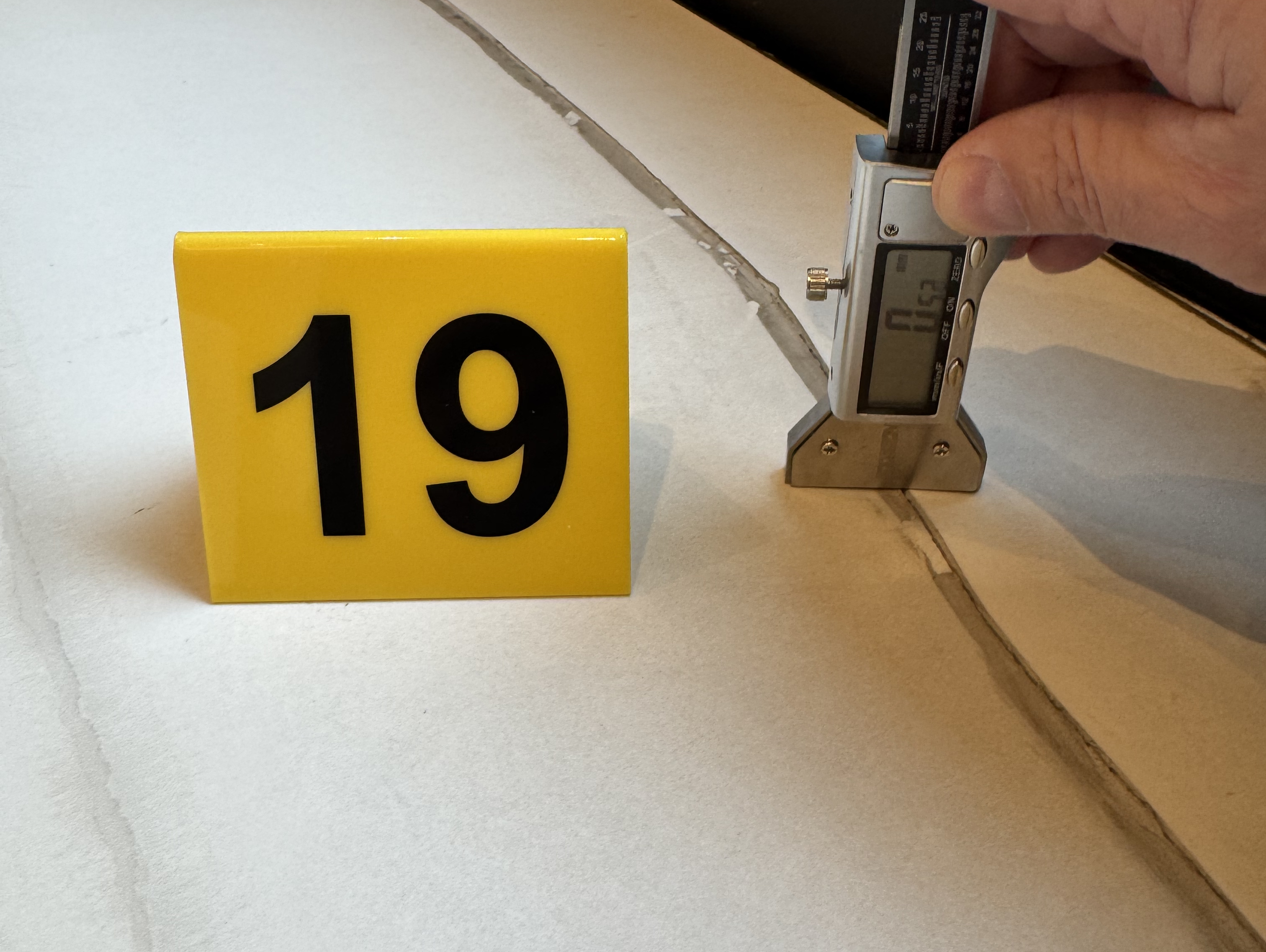
Digital caliper measuring crack width in stone tile floor caused by missing movement joint specification Lobby Floor
Luxury Hotel Lobby · Stone Tile

Lobby Tile Cracking From Missing Movement Joint Specification

Progressive cracking across a hotel lobby floor traced to the complete absence of movement joint requirements in the original specification. No EJ171 reference, no perimeter joint requirement, no field joint intervals — the spec simply didn't address movement accommodation. The resulting failure required full remediation.

Key Finding Specification deficiency allowed contractor to install without movement joints. A compliant spec would have prevented the failure entirely.
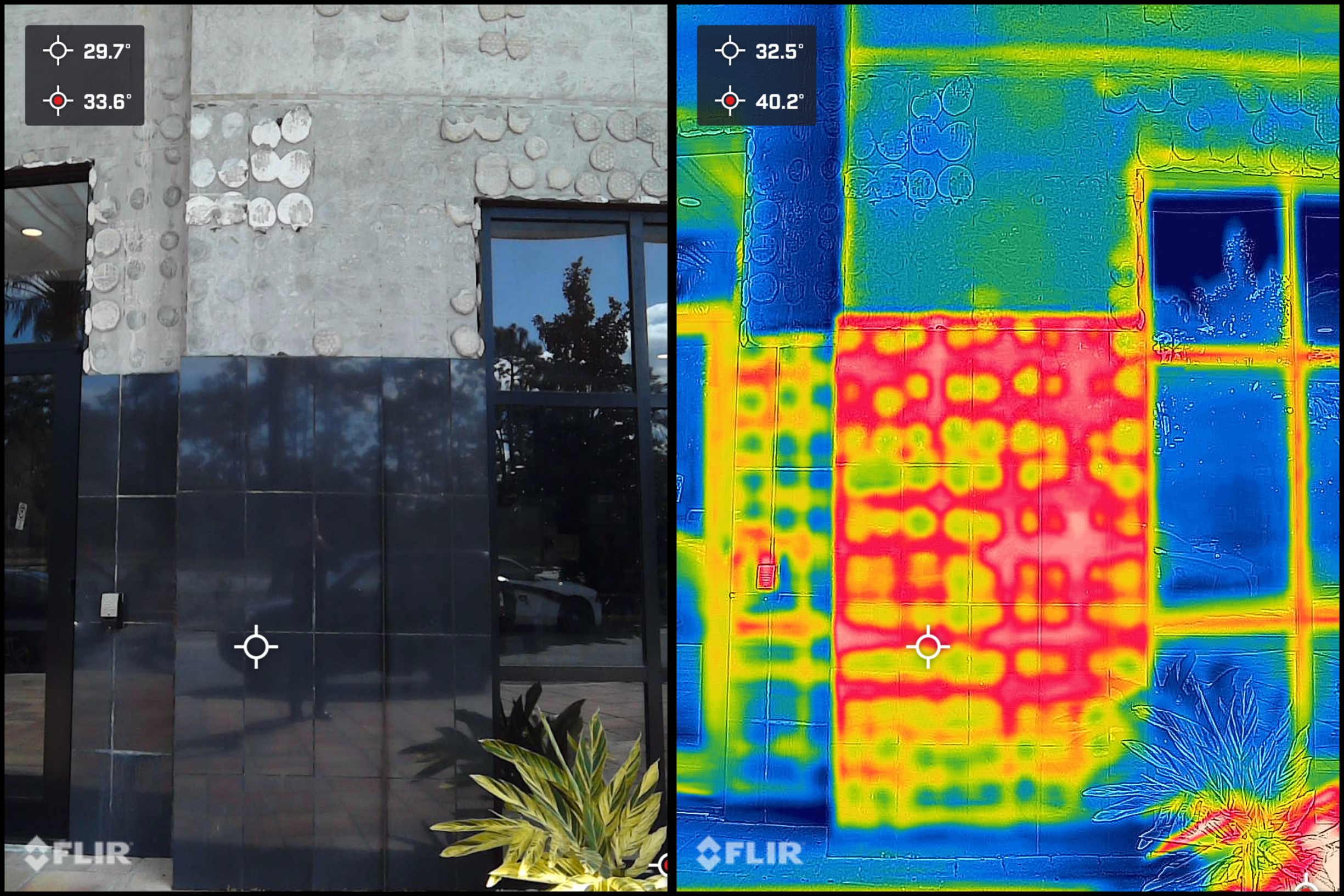
FLIR thermal imaging revealing spot bonding defects caused by insufficient bond coverage specification Exterior Wall
Hotel Exterior Facade · Concrete Tile

Exterior Bond Coverage Failure — No Minimum Specified

Thermal imaging revealed 63% bond coverage on an exterior hotel wall — 32 points below the ANSI A108.5 minimum for exterior applications. The original specification failed to cite a bond coverage percentage or reference the applicable ANSI section, leaving no enforceable standard for the contractor to meet.

Key Finding A specification that cited ANSI A108.5 bond coverage requirements would have created clear contractor accountability from day one.
View All Case Studies

Get the Spec Right

Need a Tile or Stone Specification Written or Reviewed?

Whether you're developing specs for a new project or reviewing an existing specification for compliance gaps, we can help. Submit your project for review and we'll respond within one business day.